
Parametric pandemic insurance
Cover that pays a preset amount as soon as a published epidemic index (cases, deaths, a public health emergency declaration, border closures) crosses a threshold, with no adjustment of the insured's actual loss.
Parametric pandemic insurance pays an agreed sum as soon as an epidemic index crosses a threshold, with no loss adjustment. The benchmark is the World Bank's. The PEF facility, launched in June 2017, tied 320 million dollars of bonds to triggers combining cases, deaths, growth rate and spread across several countries. It paid out roughly 196 million dollars in April 2020, weeks after Covid-19 had already overwhelmed health systems. Corporate buyers were offered the same design. In May 2018, a broker, a reinsurer and the epidemiological modeler Metabiota launched cover for revenue loss from an outbreak, with triggers based on mortality, border closures or a public fear index. Very few policies had been bound before 2020. For the underwriter, everything rides on the index definition. Data from the WHO or a national authority is hard to dispute, but it arrives late and depends on the country's testing capacity. Basis risk is heavy: a hotel can lose 60% of its revenue without the index moving, and the reverse happens too. Accumulation weighs even more, since a pandemic hits every insured in the same year, which is why the risk ends up with capital markets and governments. Not to be confused with the communicable disease exclusion, which strips this risk out of standard property policies.
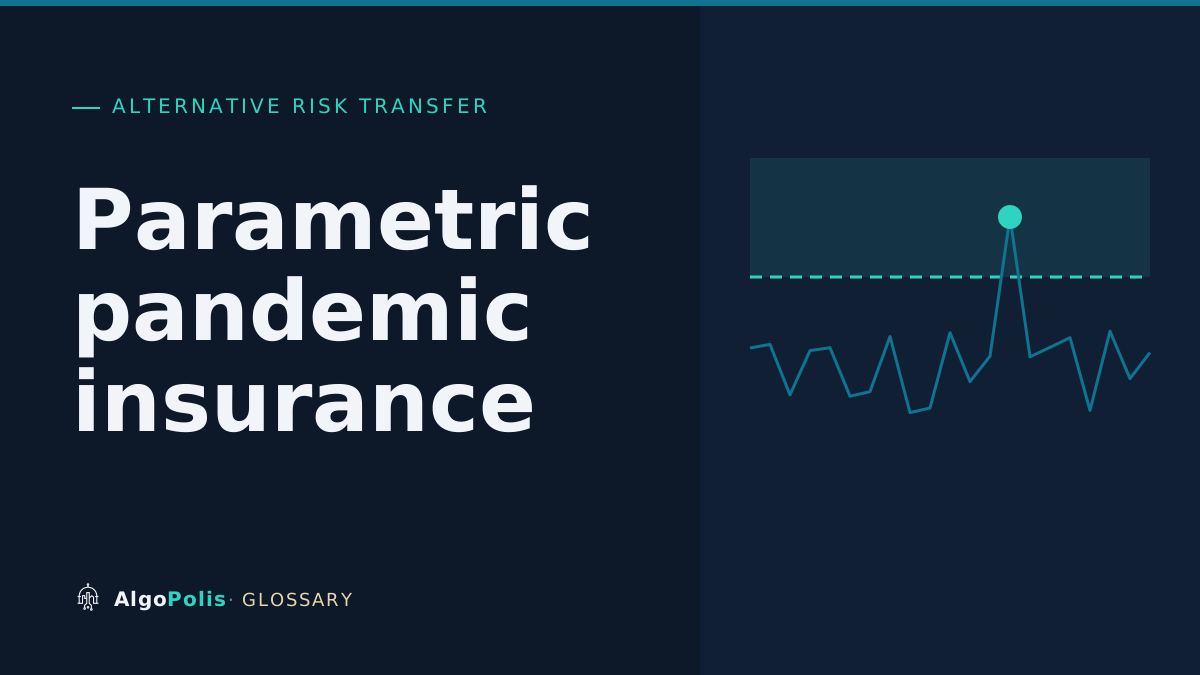
Textbook case: a trade show organizer buys 5 million euros of cover. It pays if a public health emergency of international concern is declared and the home country records more than 1,000 deaths from the same pathogen within 90 days. Both conditions are met in April. The payment lands within two weeks, before the organizer has even tallied its cancellations, which will reach 3.2 million euros.
parametric pandemic cover, epidemic index insurance, outbreak parametric cover, pandemic parametric insurance
Follow the research
One letter a week. First, the week's underwriting note, when one is published: a dated, argued decision, signed by Paul Bernardski. Then what the observatory published on cyber risk, political risk and insurance. No account, no tracking.
No spam, one-click unsubscribe, no data ever sold.